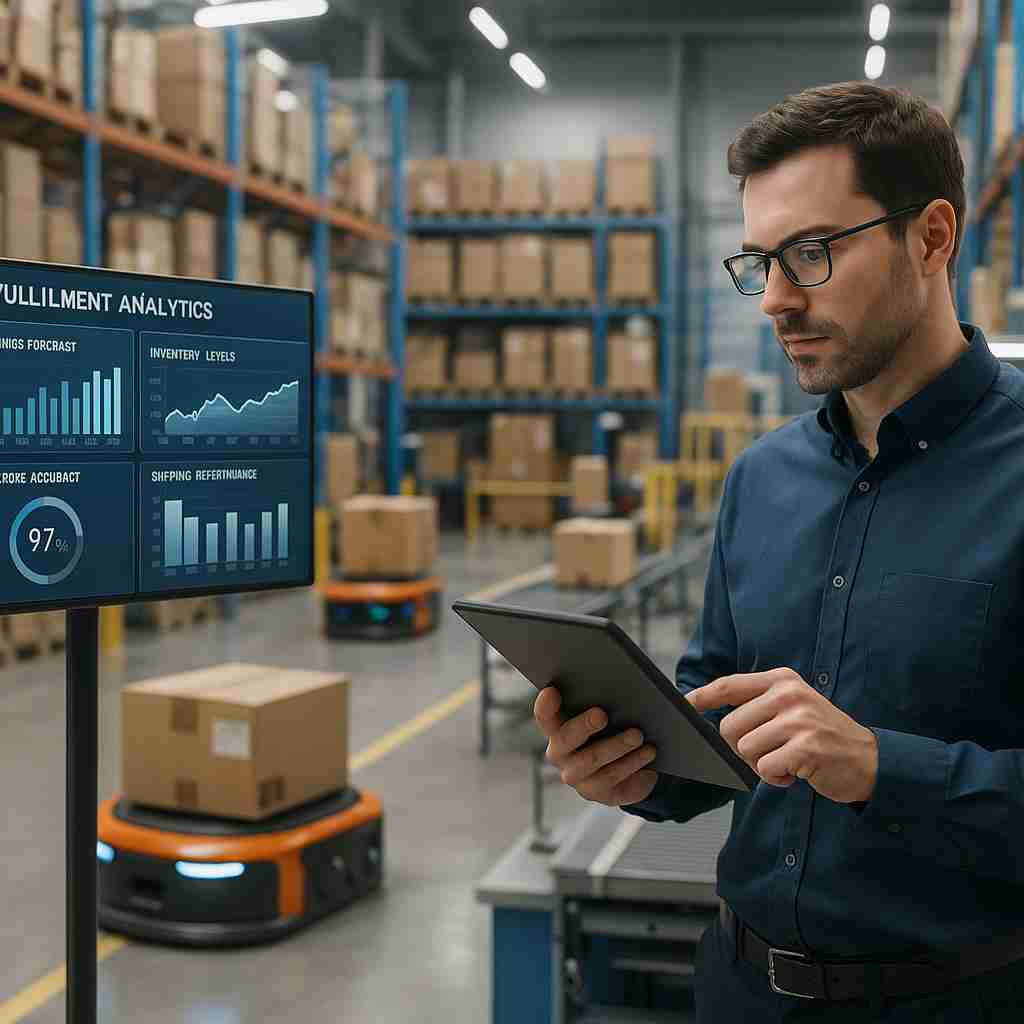
AI-based Fulfillment Solutions for eCommerce Entrepreneurs
Scale Faster With Intelligent Automation and Operational Excellence
Growing an eCommerce business becomes much easier when fulfillment keeps pace with demand. AI-based fulfillment solutions for eCommerce entrepreneurs help reduce delays, improve inventory accuracy, automate workflows, and create better customer experiences. Combined with strong operational strategy and expert guidance, these technologies support sustainable growth while freeing leaders to focus on expansion and profitability.
Why AI Is Reshaping eCommerce Fulfillment
AI-based fulfillment solutions for eCommerce entrepreneurs use machine learning, automation, and predictive analysis to improve how products move from purchase to delivery. Instead of reacting after problems appear, these systems identify patterns early and recommend better decisions. That shift changes fulfillment from a cost center into a competitive advantage.
Traditional fulfillment often depends on fixed rules, manual reviews, and historical averages. AI-driven operations continuously learn from incoming orders, seasonal trends, customer behavior, supplier performance, and shipping data. The result is faster responses when demand changes unexpectedly.
- Demand forecasting estimates future sales with greater accuracy, reducing stock shortages and excess inventory.
- Inventory optimization places products where demand is most likely, lowering storage costs and delivery times.
- Warehouse automation prioritizes picking paths, packing sequences, and labor allocation for higher throughput.
- Intelligent order routing selects the best fulfillment location based on inventory, distance, and delivery commitments.
- Shipping optimization compares routes, transit times, and carrier performance to reduce delays and expenses.
- Returns management identifies return patterns, flags unusual activity, and accelerates restocking decisions.
- Customer communication delivers proactive shipping updates and realistic delivery expectations.
- Predictive analytics highlights operational risks before they become expensive problems.
Imagine a sudden spike in demand after a successful promotion. A traditional process may oversell inventory or create shipping bottlenecks. An AI-powered workflow can adjust forecasts, redistribute inventory, reroute orders, and update delivery estimates automatically. That means fewer cancellations and happier customers.
Many businesses measure improvements through lower fulfillment costs, reduced stockouts, higher inventory turnover, faster order processing, better on-time delivery rates, and fewer return-related losses. Even small percentage gains across these areas can produce meaningful profit increases as order volume grows.
Implementation still requires quality data and clear operational processes. AI does not replace sound inventory practices or supplier relationships. It improves decision-making by working with accurate information. Entrepreneurs should begin with one fulfillment challenge, validate measurable results, and expand from there. For a deeper look at forecasting improvements, see better inventory management with AI-driven forecasting.
A common misconception is that AI removes human oversight. It does not. Teams still define business priorities, handle exceptions, and refine strategies. Useful key performance indicators include forecast accuracy, order cycle time, fulfillment accuracy, inventory turnover, shipping cost per order, return rate, and customer satisfaction. These measurements create the operational foundation needed for a scalable fulfillment ecosystem.
Building a Scalable Fulfillment System
A scalable fulfillment system begins with connected information, not more manual work. Every order, customer update, inventory change, and shipping event should move through one intelligent workflow. When AI has access to consistent data across your business, it can coordinate decisions instead of reacting to isolated events. That creates fewer delays, faster fulfillment, and a more predictable customer experience. Start by connecting your sales channels with your inventory records. Every purchase should immediately adjust available stock. Supplier updates should refresh expected replenishment dates automatically. Shipping information should flow back into customer records without manual entry. Customer support should instantly see order status, delivery progress, and previous interactions. These connections eliminate duplicate work and reduce expensive mistakes. As volume grows, automation becomes a competitive advantage instead of a convenience. AI can monitor exceptions instead of requiring employees to monitor every transaction. Teams spend less time chasing information and more time solving meaningful problems. A practical ecosystem usually includes:- Connected sales channels sharing inventory in real time.
- Supplier communication triggered by inventory thresholds.
- Shipping coordination based on delivery speed, cost, and destination.
- CRM updates reflecting every purchase and fulfillment milestone.
- Customer support receiving automatic order and shipping updates.
Avoiding Common AI Fulfillment Mistakes
A scalable fulfillment system only delivers consistent results when the foundation stays clean. Many entrepreneurs assume AI will compensate for operational weaknesses. It will not. AI usually amplifies whatever already exists. Clean processes become faster. Confusing processes become expensive. The first mistake is poor data quality. If inventory counts are inaccurate, product information is inconsistent, or customer records contain errors, automated decisions become unreliable. Small mistakes spread quickly across fulfillment. Create standards for every critical data field. Schedule regular audits. Make ownership clear so every important record has someone responsible for its accuracy. Disconnected software creates another common problem. Information becomes trapped in separate systems, forcing employees to make manual updates. Delays, duplicate work, and fulfillment errors follow. Every important workflow should move information automatically from one stage to the next. If you want deeper insight into connecting operational workflows, explore workflow automation for end-to-end fulfillment. Unrealistic expectations also slow progress. AI is not a magic switch. It improves decisions over time through quality inputs and consistent refinement. Start with one measurable objective. Validate the results. Then expand into additional processes after the first improvements become repeatable. Another overlooked issue is inadequate process documentation. Many businesses rely on tribal knowledge. One experienced employee understands everything, while everyone else guesses. Document each fulfillment step with simple instructions, decision rules, and exception handling. That clarity gives AI reliable patterns to support instead of inconsistent habits. Employee training deserves equal attention. Fear and confusion create resistance, even when automation simplifies daily work. Explain why changes matter. Show how responsibilities evolve instead of disappear. Give teams opportunities to practice before new workflows become permanent. Finally, many businesses fail to monitor meaningful metrics. Automation without measurement is simply hope.- Track fulfillment accuracy.
- Monitor inventory variance.
- Measure order processing time.
- Review return rates and customer satisfaction.
- Evaluate exception frequency and resolution speed.
Creating Long Term Competitive Advantage
The businesses that pull ahead rarely win because they work harder. They win because their systems learn faster. AI driven fulfillment creates that advantage by improving every order, every shipment, and every customer interaction. Small gains accumulate. Faster delivery estimates, fewer stock shortages, smarter inventory placement, and better resource allocation all increase customer confidence. That confidence turns first-time buyers into repeat customers. Loyalty grows when customers experience consistency. They receive accurate updates. Orders arrive as expected. Returns become simpler. Questions are answered with relevant information instead of delays. Every positive interaction lowers the chance that a customer will compare your business with a competitor on price alone. Profitability improves for similar reasons. Waste decreases while efficiency rises. Inventory sits idle for shorter periods. Shipping decisions become more precise. Labor is directed where it creates the most value. Instead of reacting to problems, leaders spend more time expanding opportunities. Businesses interested in strengthening these capabilities may also benefit from insights shared in workflow automation for end-to-end fulfillment. Competitive advantage also depends on resilience. Market conditions shift. Suppliers change. Customer demand fluctuates. AI helps identify patterns before they become costly disruptions. Teams can adjust purchasing, staffing, and fulfillment strategies using current information rather than outdated assumptions. That flexibility protects margins while maintaining service quality. The strongest organizations never assume optimization is finished. They review performance, refine workflows, and measure improvements continuously.- Track operational trends instead of isolated events.
- Develop leaders who can interpret data and make confident decisions.
- Create strategic plans that evolve with changing customer behavior.